Project Summary
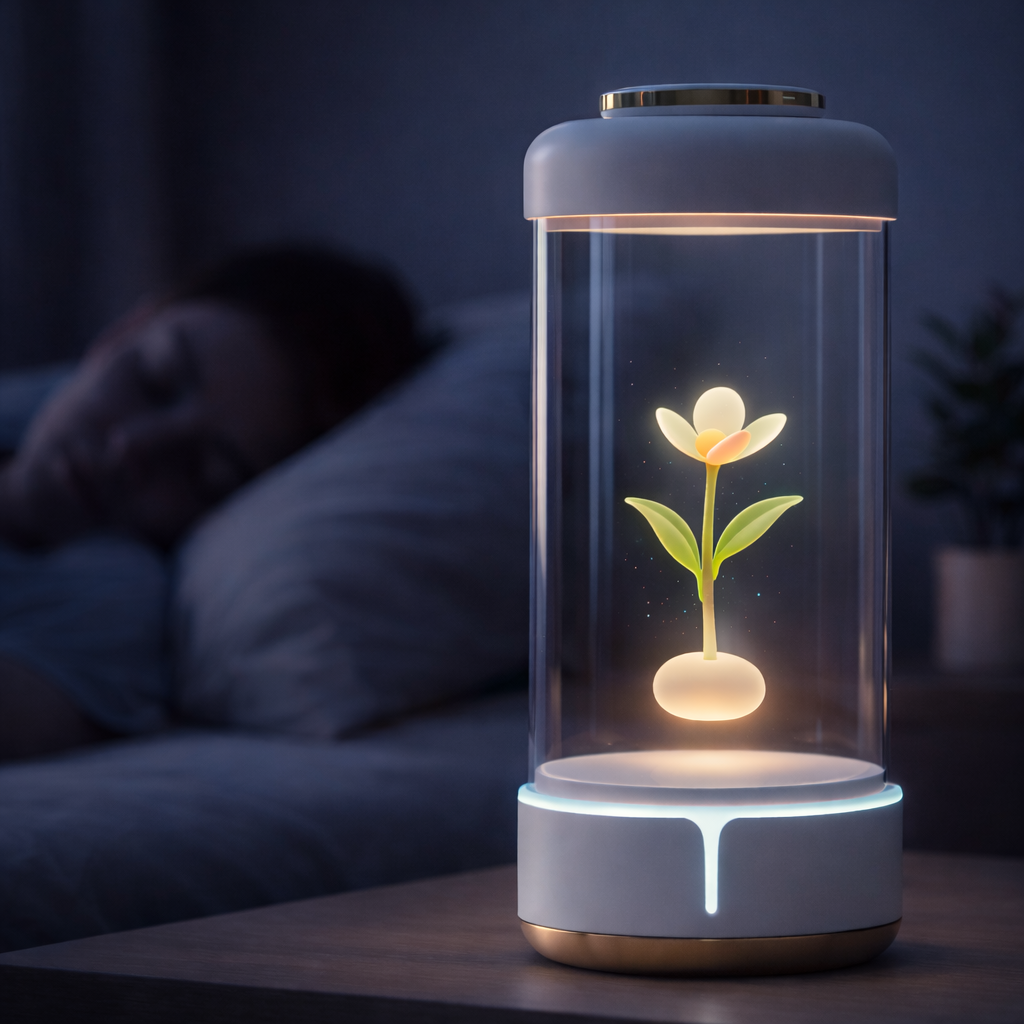
Floris is a smart bedside lamp designed to support mental recovery in physically injured patients.
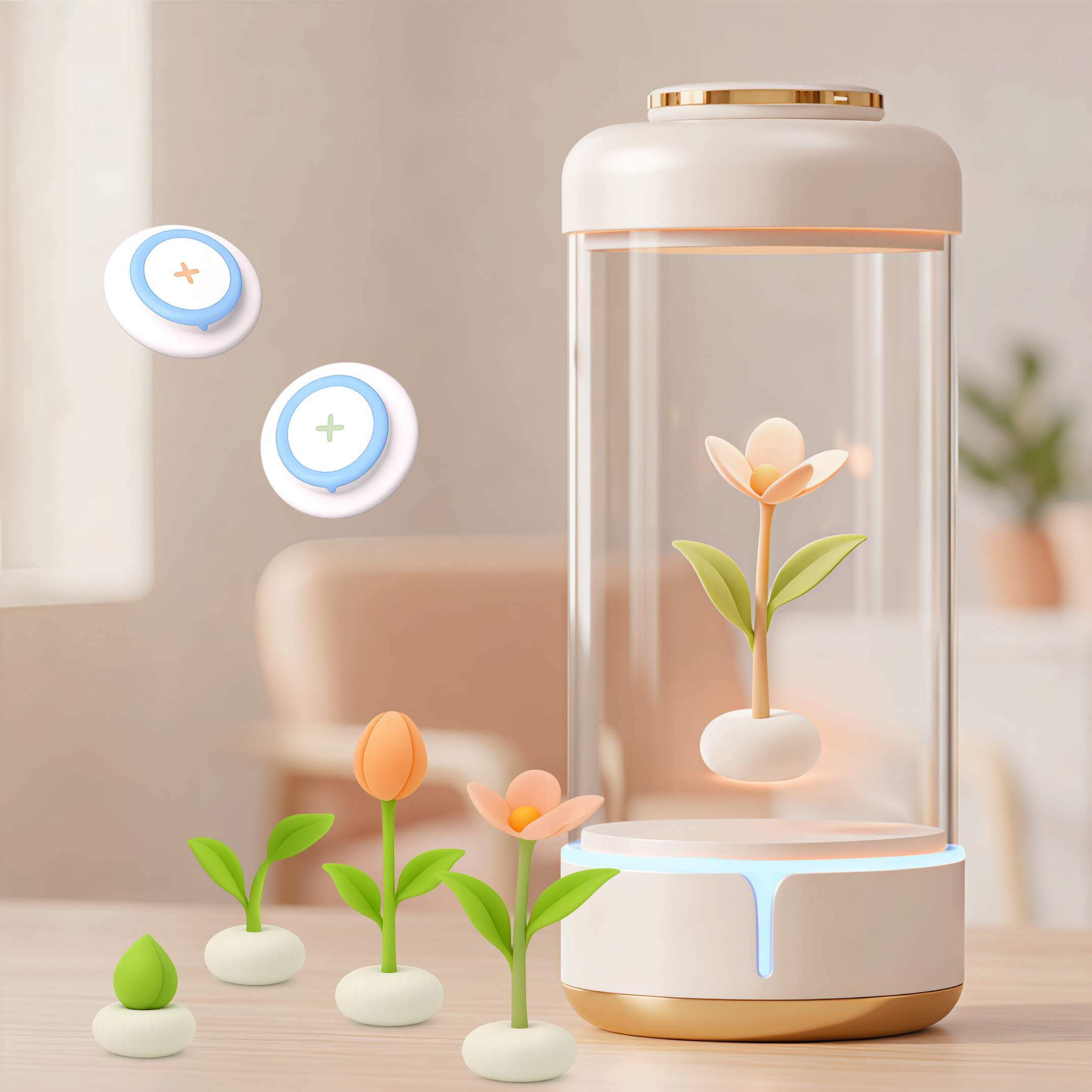
It tracks muscle strength and turns progress into a visualization, an accompaniment, and a ritual. As the patient recovers, a holographic plant flourishes, helping restore confidence in their body.
Category
Product Design
Duration
Mar-May, 2025
Tomorrow Lab
Advisor
Lynn Zhang: Research, Prototype, Visualizing
Sige Zheng: Hardware Prototype, User Testing
Tong Zhao: User Interface, CMF Design
Qi Guan: Modeling, Rendering
Role
Ideation
Problem Statement
Physical recovery is often treated as a purely medical process. However, after clinical recovery, there is still a phase of behavioral recovery.
Without proper tools in this phase, they hesitate to use their injured limbs again. This can lead to more serious consequences, such as movement imbalance and muscle atrophy.
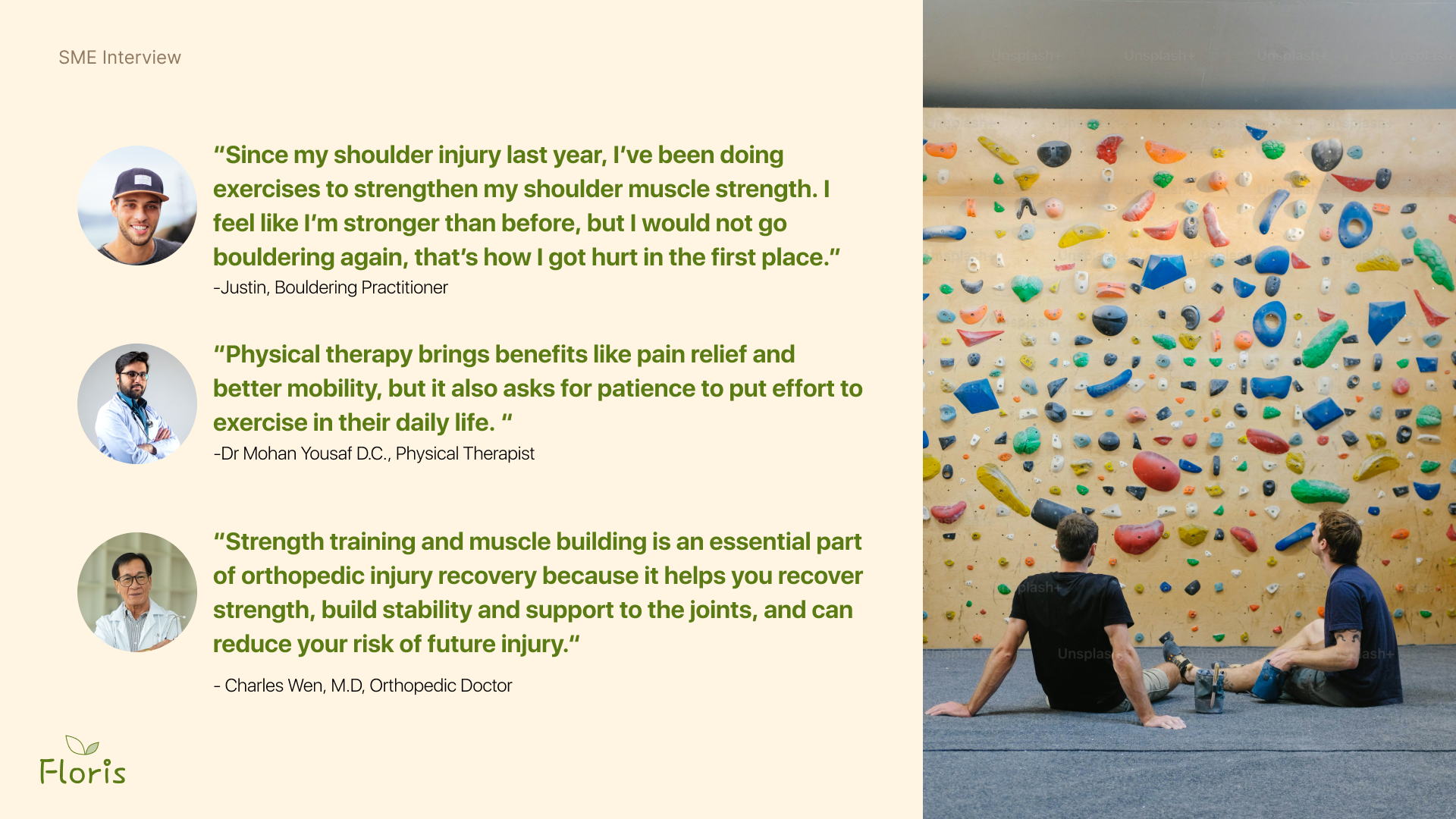
-How might we encourage people to reuse their limbs during the recovery from physical injury?
Value Proposition
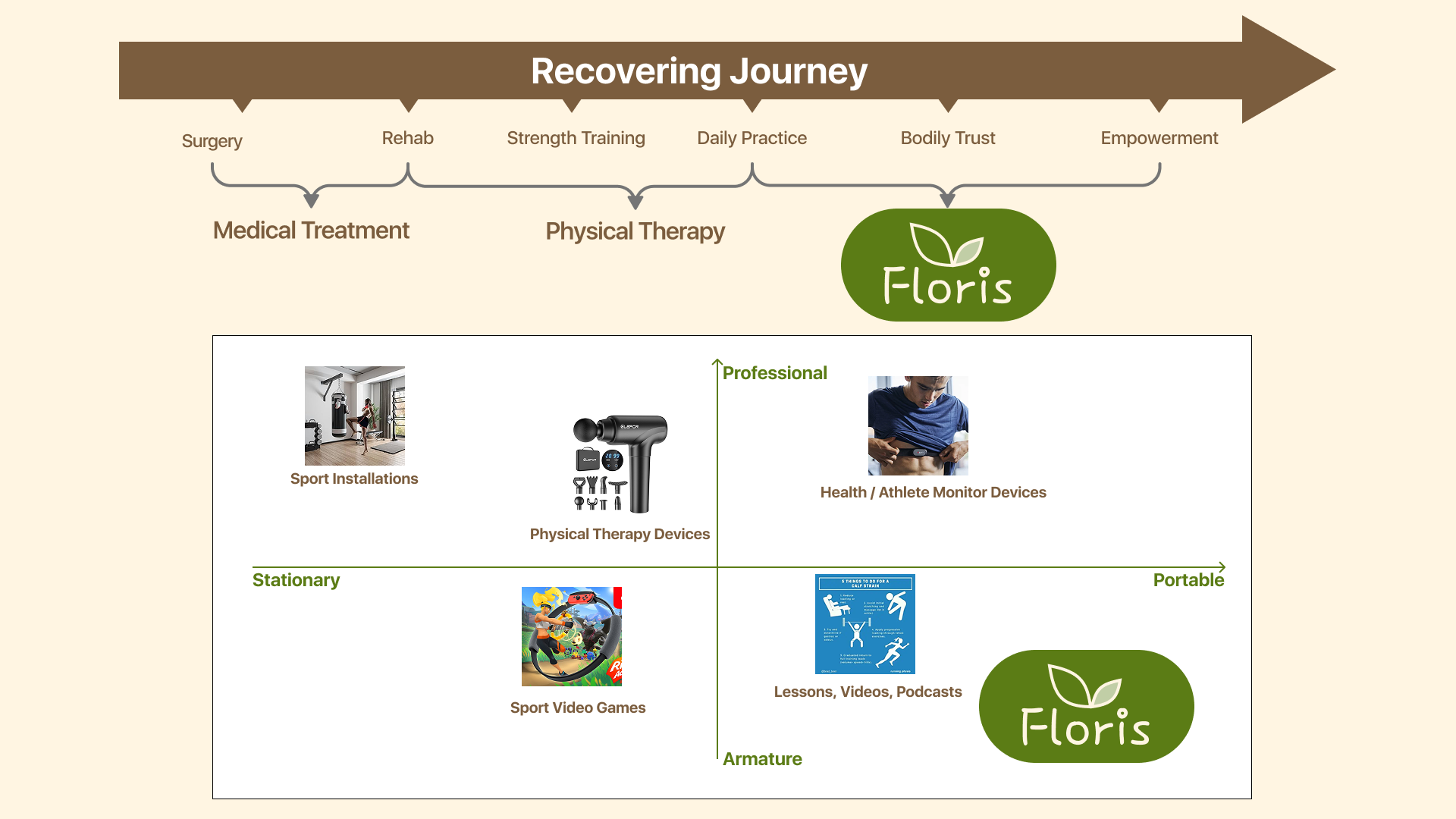
We focused on the transition stage when users are leaving structured treatment (clinical rehab / PT) and need lightweight support to keep practicing consistently in daily life.
Using senario
We decided to make a bedside device, because an ambient device can deliver feedback that is always available and low-friction, while the bed is where routine happens.
Visual Design
CMF & Function
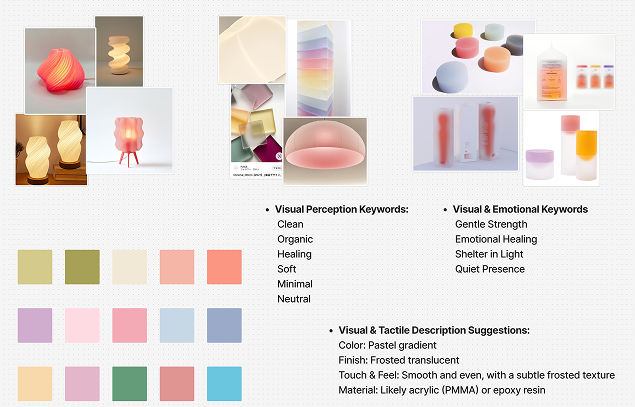
Folris’s visual style and interaction are intentionally minimal.
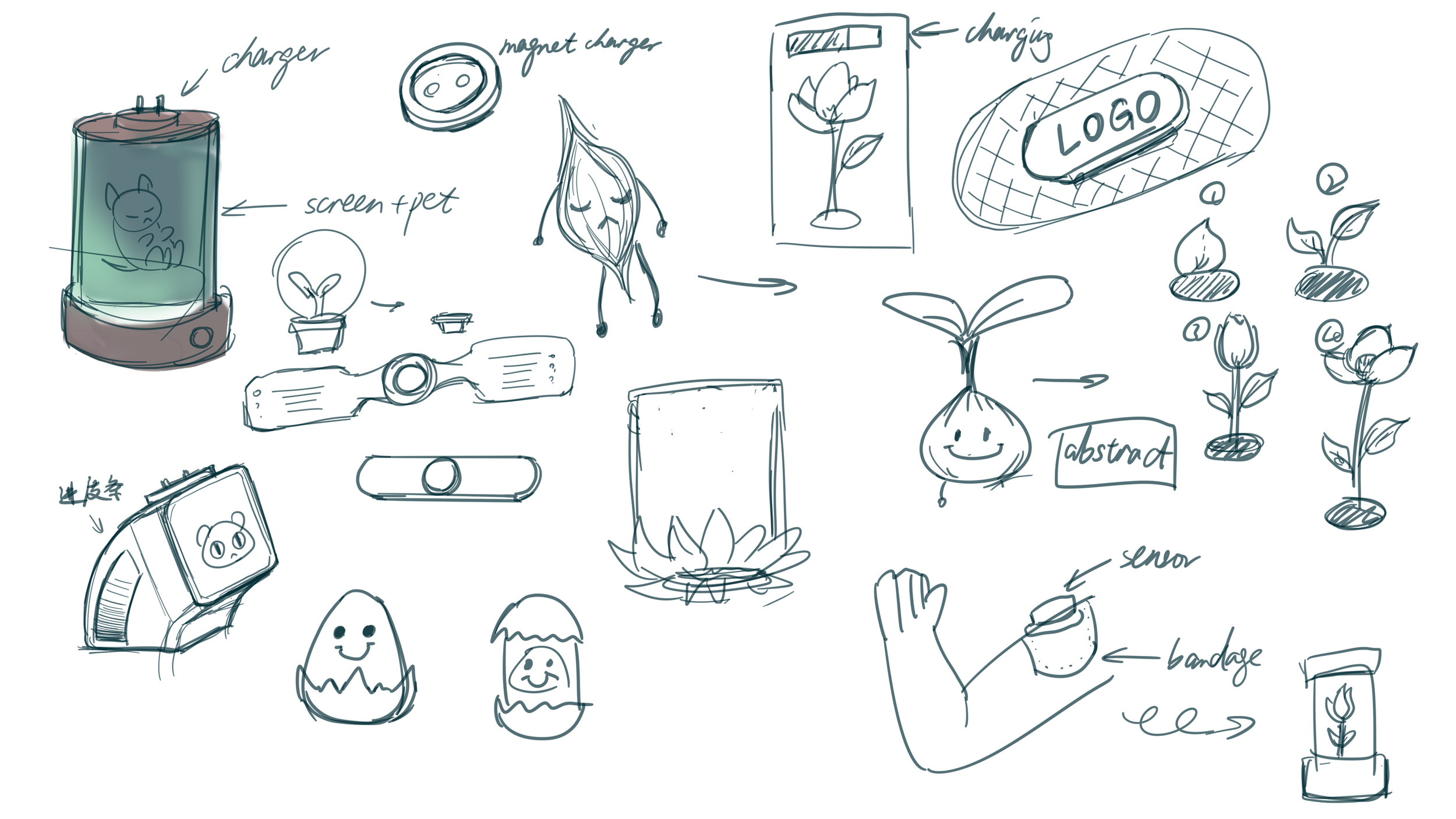
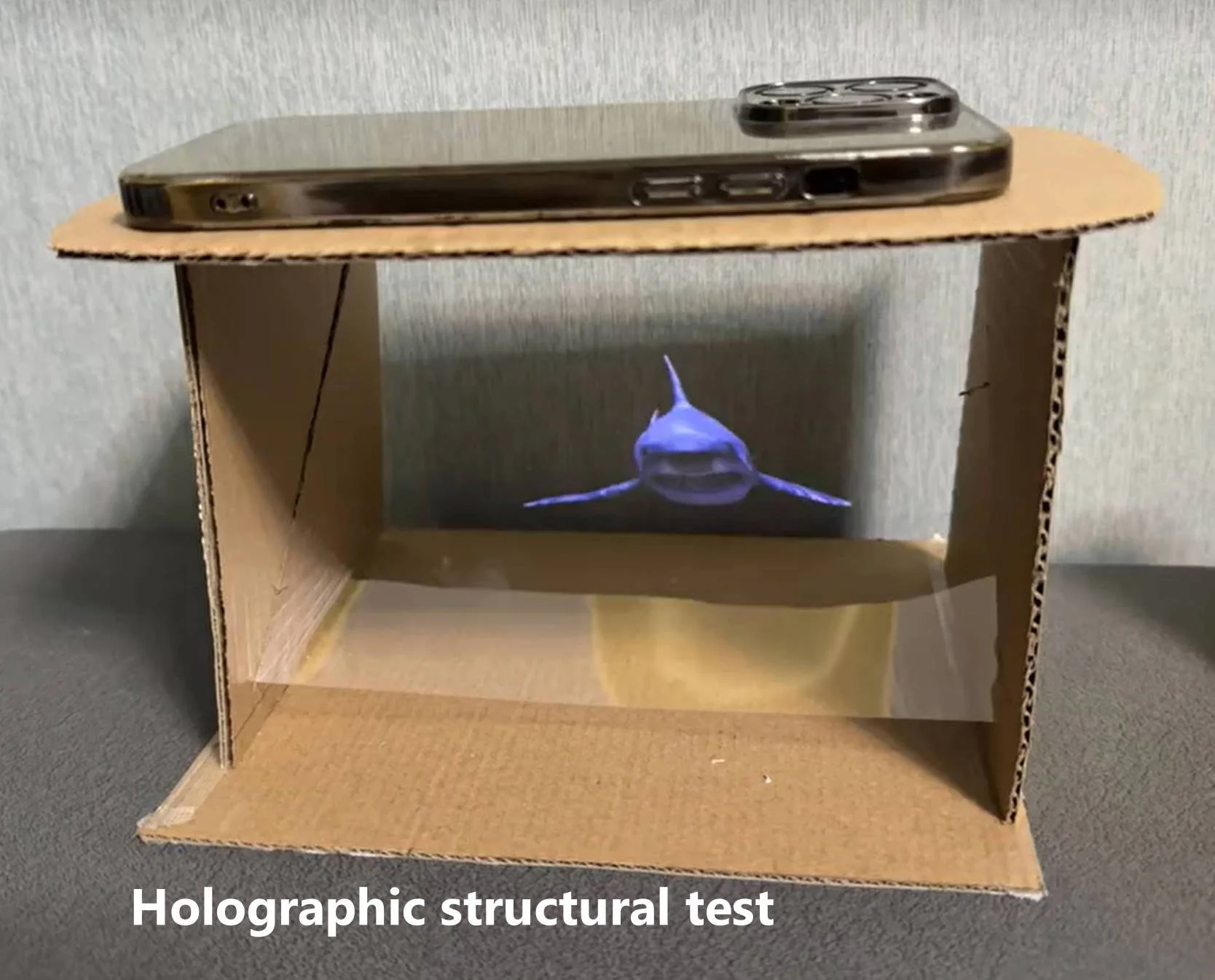
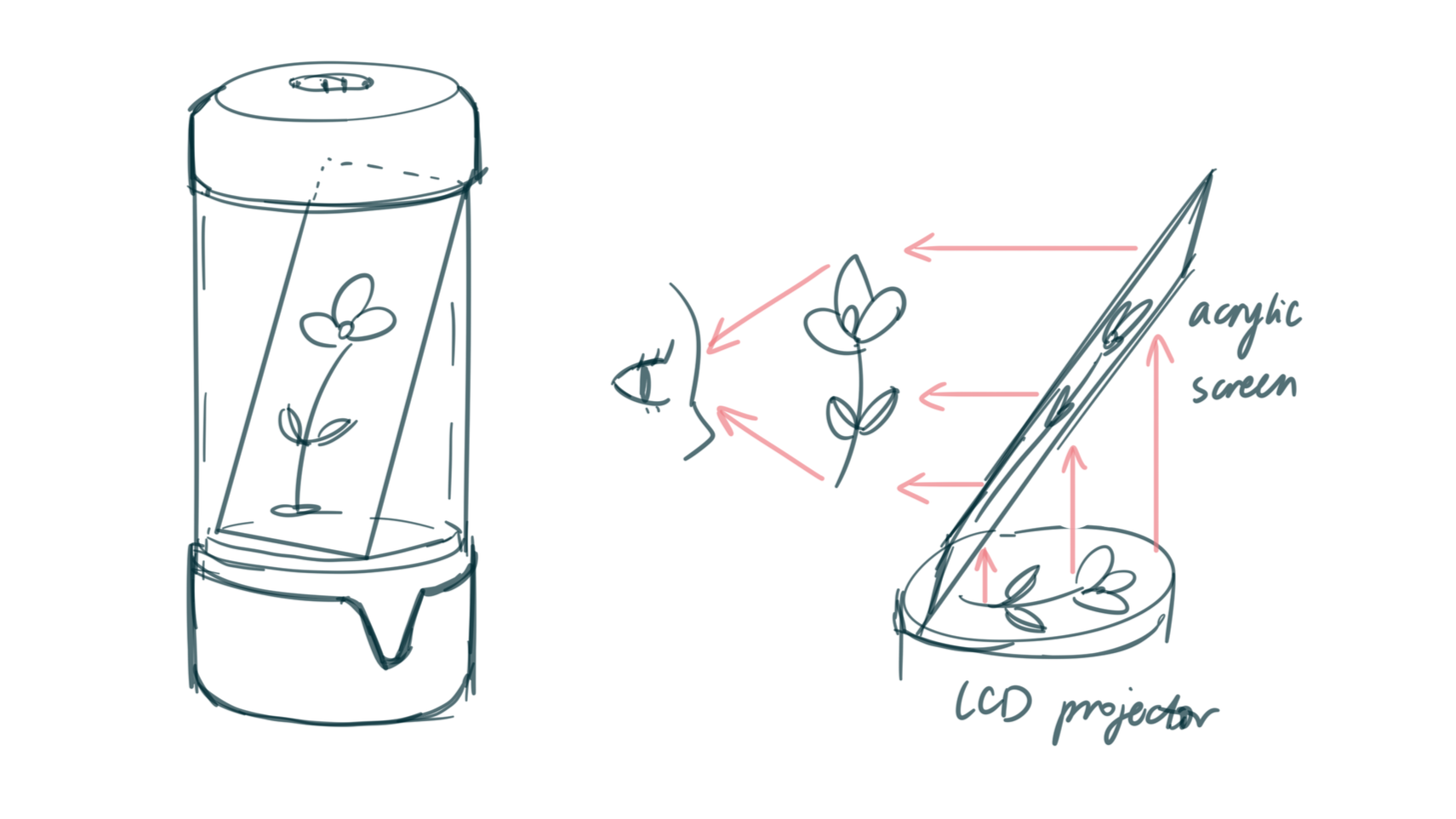
In early stage, we designed an incubator for anthropomorphic characters. It demanded too much attention and may cause risks if users push themselves too hard for it to grow. So we shifted to providing a calming companionship with a plant. Holographic technology is used to replace a touchscreen and enhance immersion.
Solution
Using Floris is a gamified ritual.
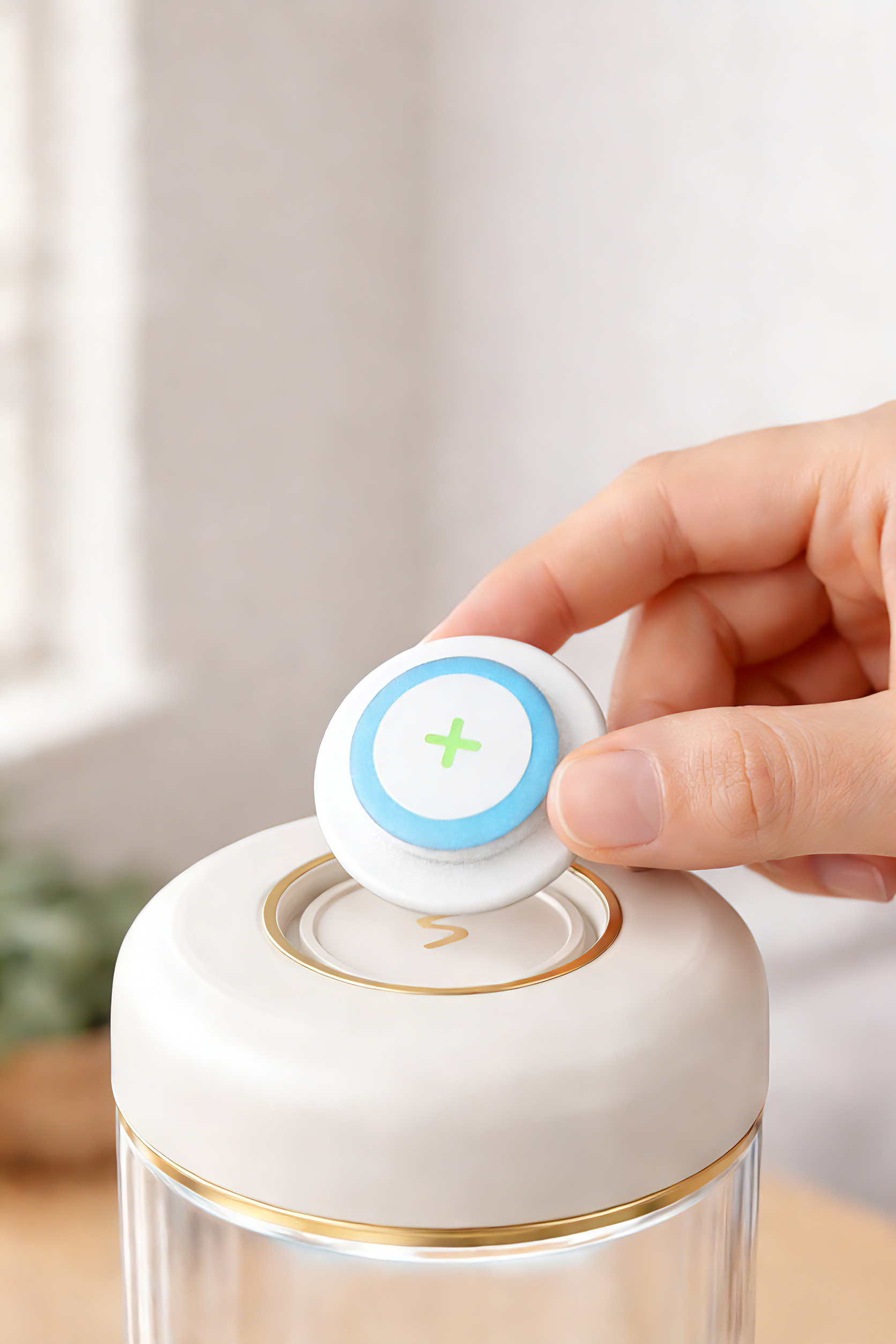
Each time the user activates their limb during daily movements, their “muscle strength” is captured and stored in the patch. When the patch is placed back on the lamp when the user goes to bed, the strength it gathers gently nourishes the plant.
Interaction Validation
Feedback Visualization
Rebuilding muscle strength and restoring trust in the body is a long-term process.
To avoid turning daily checks of subtle growth into pressure, the plant is designed with 4 growth stages only. It changes stage only after progress accumulates to a certain threshold. When it grows, the user will be surprised and joyful.
User Flow
Muscle readings and training intensity vary widely across people, so we replaced medical-style benchmarking with a self-comparing method:
On day one, users establish a personal goal by collecting data of their uninjured side.
The growth is defined by how close the strength of their injured side is to their healthy side.
Each day, the user’s muscle strength progress is compared only to the average data before.
Hardware Testing
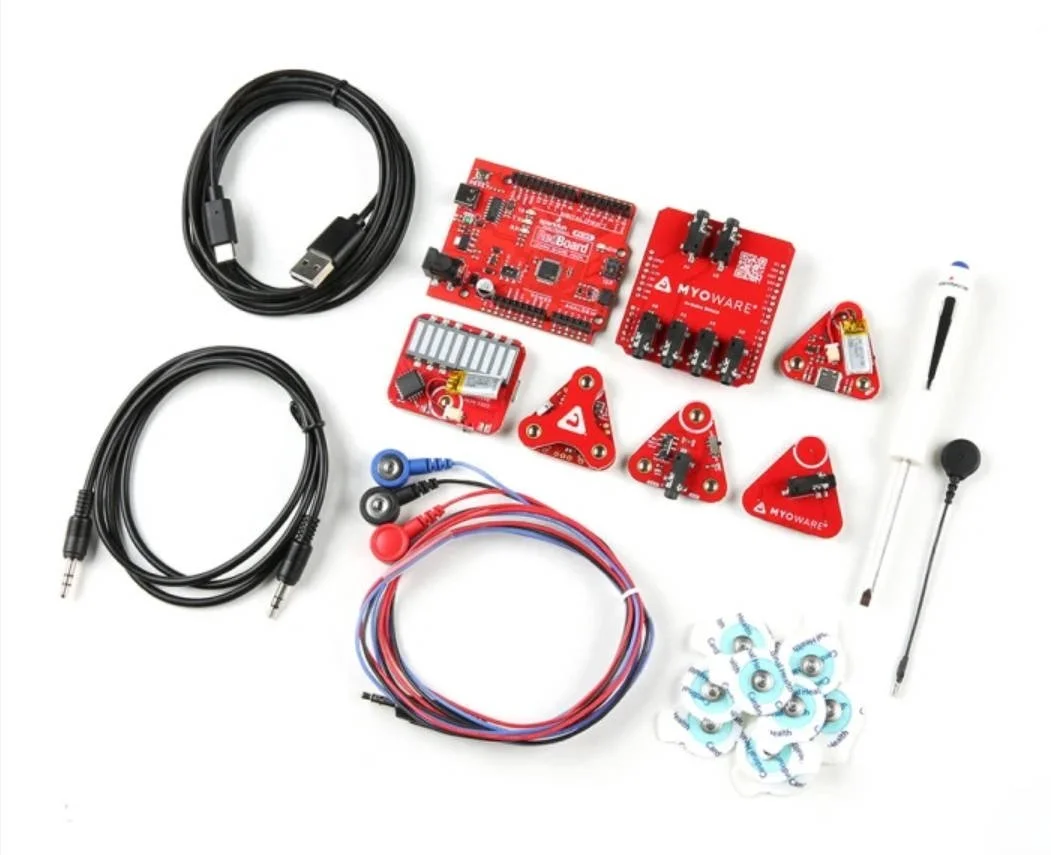
Using an accelerometer embedded in the patch to detect movement
Using an EMG (electromyography) sensor to record muscle strength data
Compare today’s highest data to the average data collected before
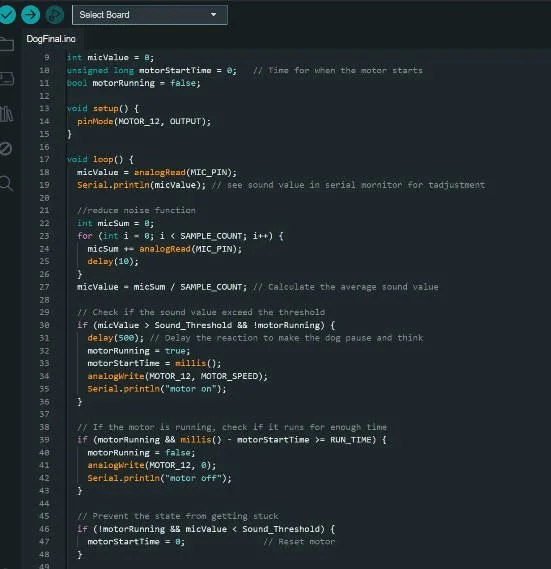
If the progress is enough for the next stage, the plant will grow (indicated by the number of LED lights in this prototype)